28 Aug 2025
Что такое ДСП? Полное руководство по его типам, применению и преимуществам
Выучить больше >


MDF furniture board is widely used for cabinet panels, wardrobes, shelving, doors and other interior furniture components because its homogeneous fiber structure provides a more consistent machining surface than many natural wood-based materials. However, the performance of MDF furniture board depends heavily on density distribution, thickness control, internal bonding, moisture behavior and surface quality. For furniture manufacturing, selecting the correct board is therefore a structural and processing decision rather than simply a material choice.
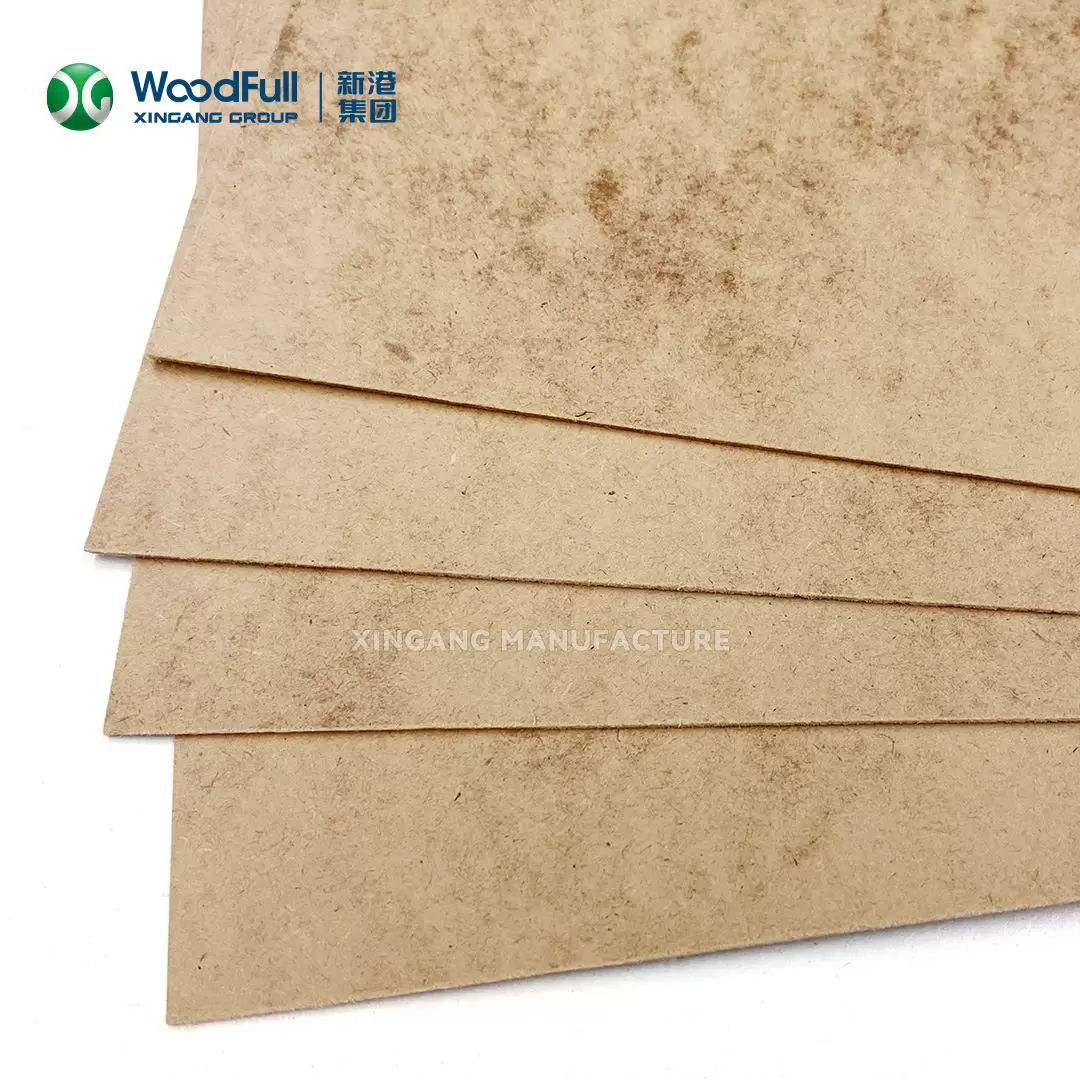
Density is one of the most important parameters in MDF furniture board because it influences screw holding, bending strength, machining behavior and surface integrity. A board with an uneven density profile can behave differently at the surface and core, creating problems during routing, drilling or edge processing.
A typical furniture-grade MDF construction uses a relatively dense surface layer combined with a more porous core. This density profile helps provide a smooth machining surface while controlling overall board weight. Excessive density can increase machining resistance and tool wear, while insufficient density may reduce fastener retention and edge strength.
For example, a cabinet door requiring repeated hinge installation has different requirements from a decorative back panel. The hinge area experiences concentrated loads, so the board must maintain sufficient local strength and dimensional stability. In contrast, a non-load-bearing decorative panel may prioritize lightweight construction and easy machining.
This is why MDF furniture board should be evaluated according to its intended component rather than using one density specification for every furniture application.
Thickness tolerance becomes particularly important when MDF furniture board is processed through CNC routing, edge banding, drilling and automated assembly. If a nominal 18 mm panel has significant thickness variation, the difference can affect groove depth, connector positioning and the final alignment between adjacent panels.
For modular furniture, common thicknesses include approximately 9 mm, 12 mm, 15 mm, 18 mm and 25 mm, although actual requirements vary by design. Thicker boards can provide greater stiffness, while thinner boards can reduce weight and material consumption where structural loading is limited.
Thickness should therefore be matched with span, loading and connection design. An 18 mm board may be suitable for many cabinet carcasses, while shelves with longer unsupported spans may require a thicker section, structural reinforcement or a different panel construction.
MDF is manufactured by bonding refined wood fibers with resin under controlled pressure and temperature. The quality of fiber preparation and bonding directly affects the internal strength of the board.
Poor internal bonding can become visible during machining when routing or drilling causes fiber pull-out, edge breakage or delamination-like defects. It can also reduce the board's ability to hold mechanical fasteners over repeated assembly cycles.
For furniture production, internal bond strength should therefore be considered together with surface hardness. A board that has a hard surface but weak internal structure may machine cleanly initially but perform poorly around screw holes, dowel joints or concealed connectors.
A stable fiber-resin distribution provides a more predictable substrate for CNC processing and subsequent furniture assembly.
MDF furniture board is frequently assembled using screws, dowels, cam-lock connectors, hinges and other hardware. Because MDF does not have the same continuous grain structure as solid wood, fastener performance depends strongly on density, fiber structure and installation parameters.
Screw diameter, pilot-hole size, insertion depth and distance from the edge all influence holding performance. Over-tightening can damage the fiber structure around the hole, particularly in lower-density material.
For cabinet manufacturing, the board specification should therefore be considered together with the actual hardware system. A panel intended for repeated knock-down assembly requires different mechanical performance from a decorative panel that is permanently bonded.
Standard MDF is primarily designed for relatively controlled indoor environments. Bathrooms, kitchens, laundry areas and other locations with elevated humidity can create additional dimensional and durability requirements.
Moisture absorption can cause thickness swelling and dimensional changes, which may affect door gaps, drawer movement and edge finishes. Edge sealing is particularly important because exposed machined edges have a different moisture response from fully finished surfaces.
Когда мебельная плита МДФ используется во влажной среде, влагостойкие сорта, соответствующие покрытия поверхности и эффективное уплотнение кромок следует рассматривать как одну систему. Выбор только влагостойкой плиты без контроля открытых краев не полностью устраняет экологический риск.
Однородная поверхность МДФ – одно из главных его преимуществ для крашеной, ламинированной и шпонированной мебели. Стабильная поверхность снижает необходимость компенсировать естественные неровности текстуры и обеспечивает равномерную основу для декоративной отделки.
Однако механическая обработка может обнажить структуру внутреннего волокна на кромках среза. Эти края могут потребовать герметизации, шлифовки или специальной обработки перед покраской или покрытием. Параметры резки с ЧПУ также влияют на качество кромки. Чрезмерная скорость подачи, неподходящий инструмент или изношенные фрезы могут привести к появлению неровных кромок, даже если сама доска соответствует требуемым характеристикам.
Поэтому при крупносерийном производстве мебели качество плит и параметры обработки должны быть оптимизированы одновременно.
Производителям мебели все чаще требуются мебельные плиты МДФ с контролируемыми выбросами и более безопасными клеевыми системами, особенно для жилых интерьеров, детской мебели и закрытых помещений.
Выбор смолы и технология производства напрямую влияют на выбросы формальдегида и других летучих веществ. Shandong Xingang Group Co., Ltd. специализируется на экологически ориентированных древесных материалах и описывает свой биомиметический клей Xin'gang как не содержащий формальдегида, бензола и вредных веществ. Компания заявляет, что этот клей широко применяется в биомиметических декоративных плитах, ультратонких плитах и биомиметической морской фанере.
Применительно к мебели экологические характеристики по-прежнему должны проверяться с помощью соответствующей документации на продукцию и применимых стандартов испытаний для целевого рынка. Это создает более надежную основу для сравнения различных решений мебельных плит МДФ.
Выбор наиболее подходящей мебельной плиты из МДФ зависит от того, как готовый компонент будет загружен, обработан, собран и подвергнут воздействию условий окружающей среды. Плотность, толщина, прочность внутреннего соединения, крепление винта, поведение при влажности, качество поверхности и показатели эмиссии следует оценивать вместе.
Дверца шкафа, боковая панель шкафа, длинная полка и декоративная стеновая панель могут быть изготовлены из МДФ, но их технические требования не идентичны. Соответствие характеристик плиты реальной конструкции мебели может улучшить стабильность обработки, уменьшить дефекты сборки и обеспечить более предсказуемую долгосрочную производительность.
For modern furniture production, MDF furniture board is best treated as an engineered material system. When fiber structure, resin technology, thickness control and downstream processing are aligned, the board becomes a more predictable foundation for efficient furniture manufacturing.